On this page
Bilirubin is a yellow pigment produced when the body recycles old red blood cells. It travels through the blood to the liver, which processes it and clears it in the bile. When this test comes back high, what we call hyperbilirubinemia, there is almost always one of four causes behind it: accelerated breakdown of red blood cells, a benign metabolic variant such as Gilbert syndrome, an obstruction of the bile ducts, or a liver disease.
The key to interpreting the result is not only the total number, but knowing whether direct (conjugated) or indirect (unconjugated) bilirubin predominates. That detail, together with the rest of the liver tests, points to the diagnosis. In this article we explain what bilirubin measures, why a high level causes jaundice and dark urine, and what each pattern means.
What is bilirubin?
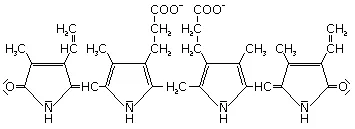
Bilirubin comes from the breakdown of heme, the part of hemoglobin that carries oxygen inside red blood cells. When a red blood cell reaches the end of its life (about 120 days), the spleen and liver take it apart, and the heme is converted first into biliverdin and then into bilirubin.
This first bilirubin is unconjugated or indirect: it is poorly soluble in water, travels in the blood bound to albumin, and cannot be eliminated in the urine. When it reaches the liver, the liver cell attaches glucuronic acid to it and turns it into conjugated or direct bilirubin, which is soluble. This form is excreted in the bile, passes into the intestine, and gives stool its color. This conjugation step is largely what determines which type of bilirubin builds up when something goes wrong.
Direct (conjugated) and indirect (unconjugated)
The laboratory reports total bilirubin and splits it into two fractions:
- Indirect (unconjugated): the bilirubin that has not yet passed through the liver. It rises when too much bilirubin is produced or when the liver cannot conjugate it fast enough.
- Direct (conjugated): the bilirubin already processed by the liver. It rises when, once conjugated, it cannot make its way to the intestine, either because of liver cell damage or because of bile duct obstruction.
In a healthy person, almost all circulating bilirubin is unconjugated. Normal total bilirubin levels are below 1 to 1.2 mg/dL, and the direct fraction accounts for less than 20% of the total. Knowing which of the two fractions predominates is the first step in finding the cause.
Why does high bilirubin cause jaundice and dark urine?
When bilirubin builds up in the blood, it settles into the tissues and turns them yellow. That is jaundice: the yellow coloring of the skin and the whites of the eyes. For it to be visible, total bilirubin usually has to exceed 2 to 3 mg/dL, so there can be mild elevations without obvious jaundice.
Dark urine (urine the color of tea or cola) appears when the fraction that rises is direct bilirubin. Because it is water-soluble, this fraction is filtered by the kidney and stains the urine. That is why dark urine goes along with liver and obstructive causes, and not with a pure rise in indirect bilirubin, which does not pass into the urine.
When the obstruction is complete or the liver’s excretion fails, bilirubin does not reach the intestine and the stools lose their color, turning pale or clay-colored. This is called acholia. The combination of jaundice, dark urine, and pale stools strongly suggests a problem with the outflow of bile.
Another common symptom when bile excretion drops is itching, which can be intense and often worsens at night.
Causes based on the pattern
The cause of high bilirubin is sorted according to which fraction predominates.
High indirect (unconjugated) bilirubin
Here the liver is usually healthy; the problem lies before it or in conjugation:
- Hemolysis: an accelerated breakdown of red blood cells produces more bilirubin than the liver can process. It is accompanied by anemia and other blood findings, such as elevated LDH and low haptoglobin. Hemolysis rarely raises bilirubin above 5 mg/dL if the liver is working normally.
- Gilbert syndrome: this is the most common cause of high indirect bilirubin and affects about 5 to 10% of the population. It is due to reduced activity of the enzyme that conjugates bilirubin. It is a benign condition: the rest of the liver tests are normal, and bilirubin rises with fasting, infections, or stress. It needs no treatment.
- Crigler-Najjar syndrome: a severe inherited deficiency of the same enzyme, very rare and present from birth with very high levels.
High direct (conjugated) bilirubin
When the direct fraction predominates, the problem is in the liver or the bile ducts. It is usually accompanied by elevated alkaline phosphatase and GGT (a cholestatic pattern) or elevated liver enzymes (a hepatocellular pattern):
- Bile duct obstruction: stones, tumors of the bile ducts or the pancreas, or a cholangiocarcinoma blocking the outflow of bile.
- Cholestatic liver diseases: primary biliary cholangitis, primary sclerosing cholangitis, and liver damage from medications or toxins.
- Acute hepatitis: inflammation of the liver disrupts bilirubin excretion. This occurs in viral hepatitis (hepatitis A, hepatitis B, hepatitis C) and in damage from drugs or toxins, such as acetaminophen toxicity or mushroom poisoning. Here liver enzymes rise sharply.
- Cirrhosis: cirrhosis raises bilirubin progressively. It is a relatively late finding that reflects loss of function and is used in severity scores such as Child-Pugh and MELD.
- Intrahepatic cholestasis of pregnancy: appears in the second or third trimester, with marked itching and elevated bile acids.
How is high bilirubin evaluated?
The first step is to split bilirubin into direct and indirect and look at it alongside the rest of the liver panel. If the indirect fraction predominates and the other tests are normal, the most likely cause is Gilbert syndrome or hemolysis, confirmed with a blood count and markers such as LDH and haptoglobin. If the direct fraction predominates, the liver and bile ducts are studied, usually starting with an abdominal ultrasound.
One useful point over time: during recovery from prolonged jaundice, dark urine can disappear while the skin remains yellow. This is explained by delta bilirubin, a fraction tightly bound to albumin that is not eliminated in the urine and takes longer to fall.
Bilirubin is rarely interpreted on its own. Its real value emerges when it is combined with liver enzymes, alkaline phosphatase, GGT, albumin, and the prothrombin time, which together draw the pattern of the problem. If your bilirubin came back high, do not interpret it in isolation: discuss it with your physician.
See also
References
- Kwo PY, Cohen SM, Lim JK. ACG Clinical Guideline: Evaluation of Abnormal Liver Chemistries. Am J Gastroenterol. 2017;112(1):18-35.
- Gondal B, Aronsohn A. A Systematic Approach to Patients with Jaundice. Semin Intervent Radiol. 2016;33(4):253-258.
- Vítek L, Tiribelli C. Gilbert's syndrome revisited. J Hepatol. 2023;79(4):1049-1055.
- Memon N, Weinberger BI, Hegyi T, Aleksunes LM. Inherited disorders of bilirubin clearance. Pediatr Res. 2016;79(3):378-386.
Related articles
Elevated liver enzymes: causes and evaluation
Elevated liver enzymes are common and do not always mean serious damage. Learn about their causes, diagnostic tests and signs requiring prompt care.
Hepatitis B tests: HBsAg, anti-HBs and anti-HBc
HBsAg, anti-HBs and anti-HBc distinguish hepatitis B infection, immunity and vaccination. Learn what the most common blood test patterns mean.
FIB-4 and FibroScan: measuring liver fibrosis
FIB-4 and FibroScan estimate liver fibrosis without a biopsy. Learn what each test measures, how results are used and when specialist care is needed.