On this page
Hepatotoxic mushroom poisoning happens when someone eats wild mushrooms that contain amatoxins, mainly from the Amanita genus. These toxins severely damage the liver and can cause acute liver failure. It is a medical emergency: if you or a family member ate mushrooms gathered in the wild and develop vomiting and heavy diarrhea hours later, go to an emergency department right away and say it may be mushroom poisoning.
The most dangerous feature of this illness is that it is deceptive. Symptoms take several hours to appear, then seem to improve, and only afterward does the liver damage become obvious, when treatment is harder. That is why time matters: the sooner medical support begins, the better the outcome.
Which mushrooms are dangerous?
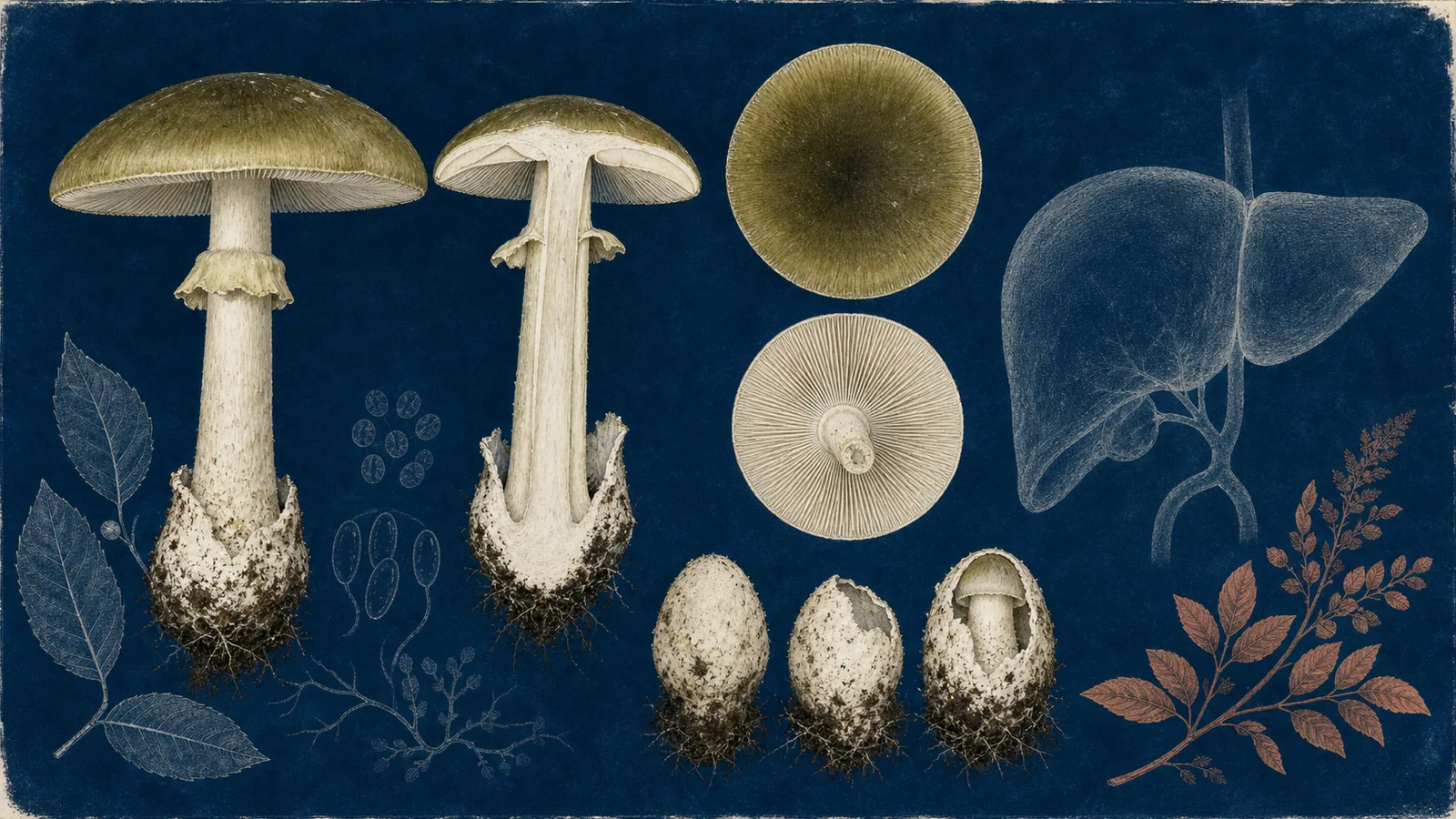
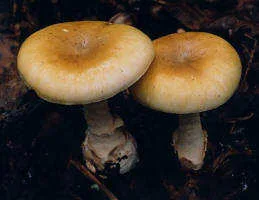
The vast majority of fatal mushroom poisonings worldwide are caused by species that contain amatoxins. The most important is Amanita phalloides, responsible for more than 90% of mushroom-related deaths. Other species from the Amanita, Lepiota and Galerina genera also contain them. In Chile, in addition to Amanita phalloides, poisoning by Amanita gemmata is well described.
Amanita phalloides grows in damp, shaded places. Its color ranges from brown to yellow or greenish, and it has white gills under the cap. The problem is that it resembles edible mushrooms, and telling them apart takes an expert eye. One key point: amatoxins are not destroyed by cooking, so cooking the mushroom does not make it safe.
Why do they damage the liver?
Amatoxins, especially alpha-amanitin, block an enzyme called RNA polymerase II inside liver cells. By halting this enzyme, the cell stops making the proteins it needs to survive and eventually dies. Because the liver concentrates and recycles these toxins, it is the organ hit hardest, followed by the kidney.
Alpha-amanitin is extremely potent: about 5 mg can be lethal for an adult, and a single cap of Amanita phalloides can contain considerably more than that. This explains why eating even one specimen can be serious.
Clinical phases
Amatoxin poisoning follows a characteristic progression, and recognizing it helps explain why it is so treacherous:
- Latency phase (6 to 12 hours): nothing happens after eating the mushroom. This symptom-free delay is the trap: it distinguishes amatoxins from milder poisonings that appear within the first or second hour.
- Gastrointestinal phase (6 to 24 hours): nausea, vomiting, abdominal pain and heavy diarrhea begin, sometimes with blood. Fluid loss can cause dehydration and disturbances in the body’s salts.
- Apparent recovery phase (24 to 48 hours): the digestive symptoms ease and the patient seems to improve. Meanwhile, and silently, blood tests begin to show liver damage.
- Liver failure phase (3 to 5 days): liver failure sets in, with jaundice, clotting problems and hepatic encephalopathy. In severe cases, kidney failure and involvement of other organs follow.
Is it always fatal?
No. The outlook has improved greatly with modern intensive care. In experienced centers, mortality today is below 10%, compared with the 20 to 30% reported in the past. The difference comes from early diagnosis, aggressive fluid replacement and timely treatment.
Treatment
There is no single antidote with proven effectiveness, so management combines several measures. It must be done in a hospital, ideally with the support of a poison control center. The main ones are:
- General support: intravenous replacement of fluids and salts from the very start, one of the most important interventions.
- Reducing absorption: oral activated charcoal to trap the toxin remaining in the intestine.
- Silibinin (intravenous silymarin): derived from milk thistle, it blocks the toxin from re-entering liver cells. It is the best-supported therapy and is given intravenously (Legalon SIL).
- N-acetylcysteine: an antioxidant also used in acetaminophen poisoning; it is usually combined with silibinin.
- Penicillin G: used historically in high doses, it now has a secondary role compared with silibinin.
- Extracorporeal purification techniques: in selected cases, systems such as MARS can help support the patient while the liver recovers or a transplant is arranged.
When the damage progresses to acute liver failure and the usual criteria are met, liver transplant is the only treatment with proven effectiveness and can be lifesaving.
Prevention
The rule is simple and allows no exceptions: do not eat wild mushrooms unless an expert has identified them with certainty. No home trick can tell a toxic mushroom from an edible one, not the color, not the smell, not tasting a piece, not cooking them. Many poisonings occur in families who gather mushrooms out of habit or among people foraging for recreational use.
In Chile, cases tend to cluster in autumn and winter, after the rains, when these mushrooms grow more readily, especially in the south. When in doubt, do not eat them. If any symptoms appear after eating wild mushrooms, go to the emergency room and, if possible, bring a sample of the mushroom or a photo to help with the diagnosis.
See also
References
- Kayes T, Ho V. Amanita phalloides-Associated Liver Failure: Molecular Mechanisms and Management. Int J Mol Sci. 2024;25(23):13028.
- Caré W, et al. Amatoxin-containing mushroom poisoning: An update. Rev Med Interne. 2024;45(7):423-430.
- Ye Y, Liu Z. Management of Amanita phalloides poisoning: A literature review and update. J Crit Care. 2018;46:17-22.
- Mengs U, Pohl RT, Mitchell T. Legalon® SIL: the antidote of choice in patients with acute hepatotoxicity from amatoxin poisoning. Curr Pharm Biotechnol. 2012;13(10):1964-1970.
- Le Daré B, Ferron PJ, Gicquel T. Toxic Effects of Amanitins: Repurposing Toxicities toward New Therapeutics. Toxins (Basel). 2021;13(6):417.
Related articles
Herbal supplements and liver injury
Herbal supplements, weight-loss products and sports preparations can injure the liver. Learn the warning signs and what to do if you suspect a reaction.
Acetaminophen (paracetamol) liver toxicity
Acetaminophen poisoning is a common cause of acute liver failure. Learn the toxic dose, why timing matters, and why N-acetylcysteine saves lives.
The myth of the daily glass of wine: is moderate drinking good for you?
A daily glass of wine is not a healthy habit. Current evidence shows there is no risk-free level of alcohol, either for the heart or for the liver.