On this page
- What is a liver transplant?
- Who needs a liver transplant?
- When is a transplant indicated?
- How are patients prioritized? The MELD score
- What is the pre-transplant evaluation like?
- Are there contraindications?
- The surgery and recovery
- Immunosuppression: lifelong medication
- What are the results?
- How can I know if I need a transplant?
- See also
A liver transplant is the surgery that replaces a diseased liver, one that can no longer do its job, with a healthy liver from a donor. It offers the best hope to people with advanced liver disease that cannot be resolved any other way, and its results today are very good: in Chile, more than seven of every ten transplanted people are still alive at five years.
If a transplant has been raised as an option for you or someone close to you, it is natural for the news to bring fear and uncertainty. Understanding what the procedure involves, who is a candidate and what happens at each stage helps to manage that anxiety. Your own doctor will always be the best source of information, but what follows can complement what they tell you.
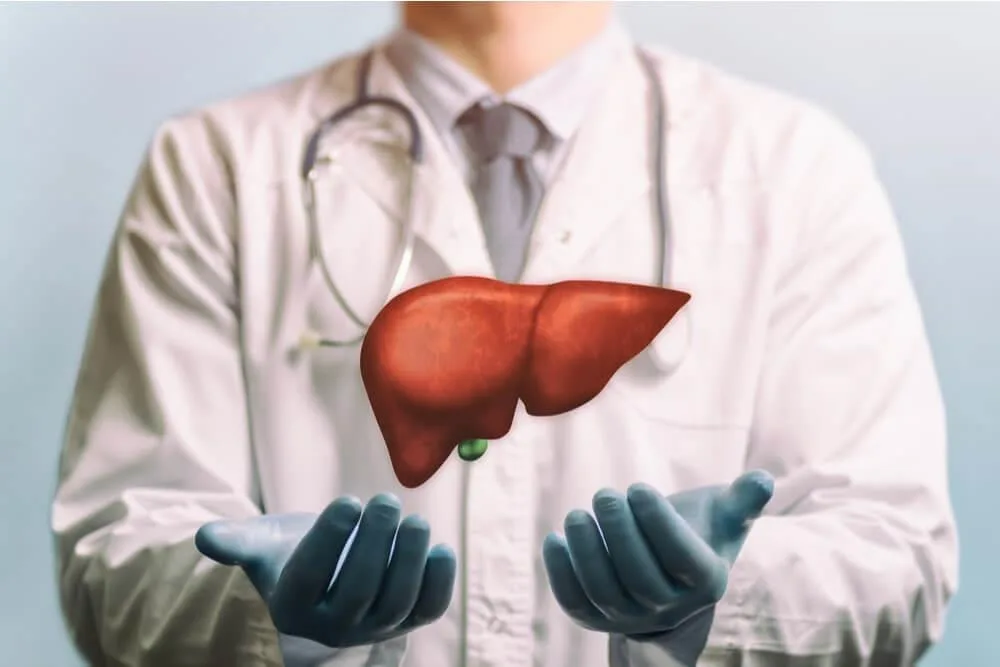
What is a liver transplant?
In its most common form, a liver transplant means removing the damaged liver and replacing it with one from a donor. That donor can be a deceased person (cadaveric donor) or a living donor, usually a relative, who donates part of their liver. The liver has the remarkable ability to regenerate, so both the transplanted portion and the part left in the living donor grow back to a functional size.
Most transplants in adults use deceased donors. Given the shortage of organs, living-donor transplantation and other techniques (such as splitting one liver for two recipients) help increase the number of available organs.
Who needs a liver transplant?
A transplant is considered when the liver fails severely and no other therapy can reverse it. The three main situations are:
- Decompensated cirrhosis. This is the most frequent cause. When cirrhosis produces complications such as ascites that no longer responds to treatment, bleeding from varices, hepatic encephalopathy or serious infections, a transplant may be the only way out.
- Hepatocellular carcinoma (liver cancer) within defined criteria. In patients with cirrhosis and a limited tumor, a transplant treats both the cancer and the underlying disease at once.
- Acute (fulminant) liver failure. A healthy liver that stops working within days or weeks, for example from a poisoning or a severe hepatitis. This is a medical emergency.
In Chile, the main causes of transplant in adults are advanced fatty liver disease, autoimmune hepatitis, alcoholic liver disease and primary biliary cholangitis.
When is a transplant indicated?
Timing is key. Transplanting too early exposes a person to the risk of major surgery when they might still live well for several years with their own liver. Transplanting too late, on the other hand, may mean the patient is already too sick to withstand the operation. In general, entry to the waiting list is evaluated once the disease reaches a certain severity, measured with objective scores such as the MELD or the Child-Pugh classification.
How are patients prioritized? The MELD score
Organs are scarce and must be distributed with fair, transparent criteria. For this, the MELD score (Model for End-Stage Liver Disease) is mainly used, a calculation based on blood tests (bilirubin, creatinine and the INR of clotting) that estimates the risk of dying in the coming months. The current version, MELD 3.0, also incorporates blood sodium and sex, because they improve the prediction of prognosis. A low sodium (hyponatremia) is a sign of severity that the formula takes into account.
The logic is simple: whoever has a higher MELD is sicker and gets priority for a compatible organ. There are some exceptions that receive special scores, such as acute liver failure and hepatocellular carcinoma within criteria, situations where MELD alone does not fully reflect the urgency.
For hepatocellular carcinoma, the so-called Milan criteria (a tumor up to 5 cm, or up to three nodules up to 3 cm each, without vascular invasion or metastasis) define the patients who achieve excellent results with a transplant, comparable to those of people transplanted without cancer.
What is the pre-transplant evaluation like?
A transplant is a highly complex procedure, so before joining the waiting list the candidate goes through a complete evaluation. Its purpose is to confirm that the transplant is needed, that the person can tolerate the surgery and that there is no other serious disease that argues against it. It usually includes:
- Broad blood tests and screening for infections.
- Assessment of the heart and lungs.
- Detailed imaging of the liver and its vessels (Doppler ultrasound, CT scan or MRI).
- Upper digestive endoscopy and, at times, colonoscopy.
- Evaluation by a multidisciplinary team: hepatologists, surgeons, anesthesiologists, cardiologists, infectious disease specialists, psychiatrists, psychologists and social workers.
The decision to transplant is never made by a single person, but by this team together.
Are there contraindications?
Each center has its own policies, and many conditions that once excluded a transplant no longer do. HIV infection, for example, is no longer an absolute contraindication. Among the situations that may argue against a transplant are:
- Other serious, uncontrolled diseases, such as an active cancer outside the liver or advanced heart or lung failure.
- Active, uncontrolled infections.
- Ongoing alcohol or drug use. In alcoholic liver disease, a period of abstinence and support to maintain it are taken into account.
Age by itself is not a contraindication: overall health matters more than the number of years.
The surgery and recovery
The operation lasts several hours and requires an experienced surgical team. After surgery, the patient spends a few days in the intensive care unit and then continues to recover in the hospital. Most complications, when they occur, appear during the first weeks and months and are now managed better and better.
Immunosuppression: lifelong medication
So that the body does not reject the new liver, a transplant recipient must take lifelong immunosuppressant medication. The most widely used is tacrolimus, often combined with other drugs such as mycophenolate or corticosteroids, especially in the first months. These medications require care:
- Taking them with strict regularity, at the same time, without skipping doses.
- Periodic check-ups with blood tests to adjust the dose and monitor liver and kidney function.
- Extra caution around infections, because the immune defenses are reduced.
- Attention to other long-term consequences, such as high blood pressure, diabetes, high cholesterol or kidney damage, which are actively managed.
Over time, doses usually decrease, but treatment is not stopped. Adherence to these medications is one of the most important factors in the long-term success of a transplant.
What are the results?
Very good, and they have improved steadily. In experienced centers, most transplanted people regain an active life of good quality. At the Pontificia Universidad Católica de Chile, survival after transplant was about 82% at one year and 71% at five years in its series of the first 300 cases, figures comparable to those of the best international centers.
How can I know if I need a transplant?
Raise it with your treating doctor. If they are not familiar with the process, you can request a direct evaluation at a transplant center. In Chile, you can be evaluated by a hepatologist at the Pontificia Universidad Católica.
See also
References
- European Association for the Study of the Liver. EASL Clinical Practice Guidelines on liver transplantation. J Hepatol. 2024;81(6):1040-1086.
- Kim WR, et al. MELD 3.0: The Model for End-Stage Liver Disease Updated for the Modern Era. Gastroenterology. 2021;161(6):1887-1895.e4.
- Kim WR, et al. Hyponatremia and mortality among patients on the liver-transplant waiting list. N Engl J Med. 2008;359(10):1018-1026.
- Mazzaferro V, et al. Liver transplantation for the treatment of small hepatocellular carcinomas in patients with cirrhosis. N Engl J Med. 1996;334(11):693-699.
- Guerra JF, et al. Liver transplantation: development, learning curve and results after the first 300 cases. Rev Med Chil. 2019;147(8):955-964.
Related articles

The first months after a liver transplant: care and warning signs
A practical guide to the first months after a liver transplant: follow-up, immunosuppressants, safe recovery, infection prevention and warning signs.

Long-term care after a liver transplant
After the first year of a liver transplant, medication, preventive care and sustainable daily habits protect both the transplanted liver and overall health.

Hepatocellular adenoma: what it means and when it needs treatment
A hepatocellular adenoma is benign, but some may bleed or grow. Learn how hormones, obesity, pregnancy and tumor size affect treatment and follow-up.