On this page
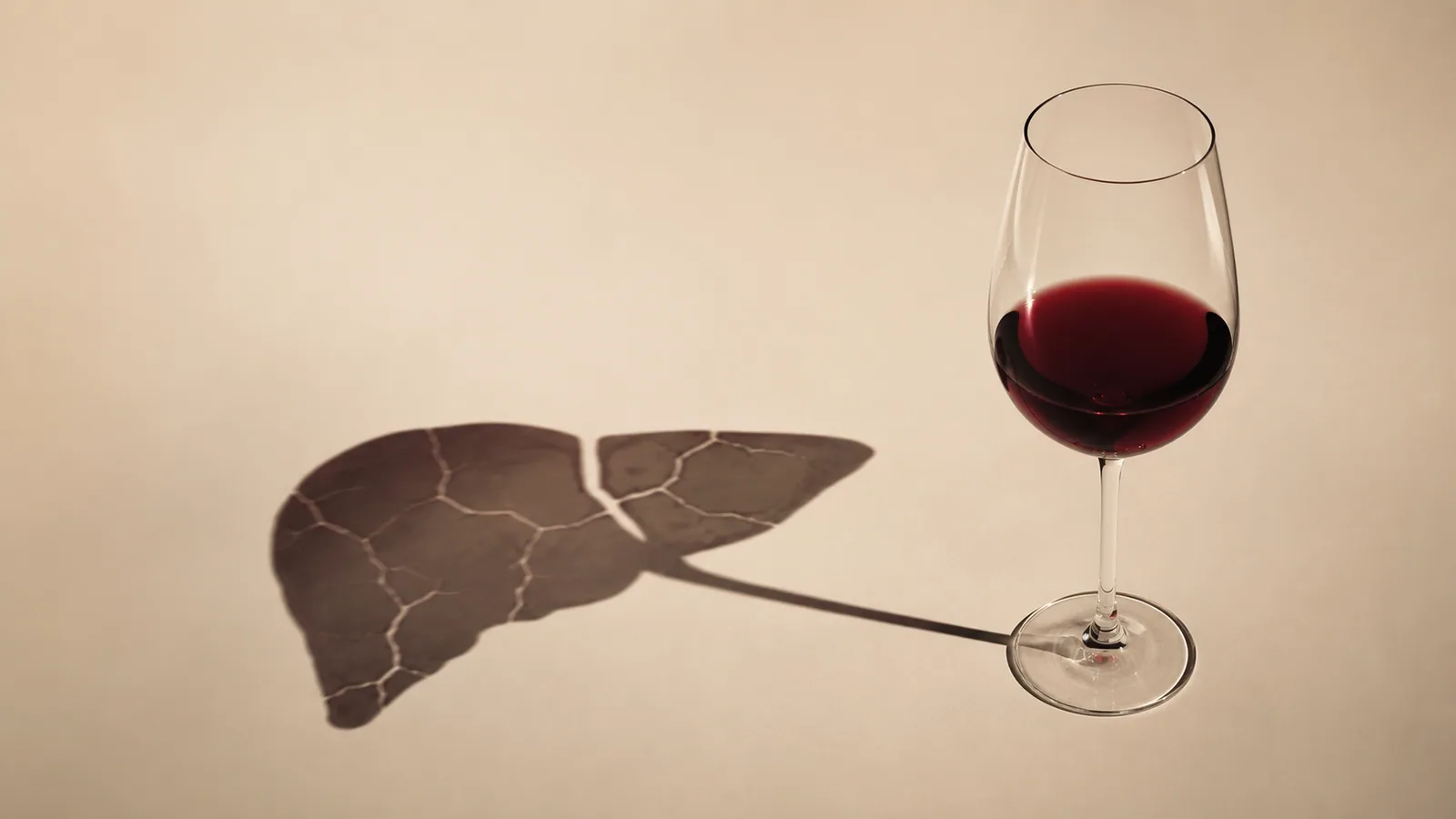
For years we were told that a daily glass of wine was good for the heart. Today we know that advice does not hold up. The most recent evidence shows that there is no risk-free level of alcohol consumption, and that the supposed cardiovascular benefits of wine are explained by flaws in older studies, not by any virtue of the drink itself. If you do not drink, there is no health reason to start.
This is not a moral judgment or a call to feel guilty. It is simply what the data say once they are examined with better methods. For the liver in particular, the message is direct: alcohol is always a source of harm, and there is no dose that can be considered protective.
Where did the idea that wine is good for the heart come from?
The idea came from observational studies conducted several decades ago. In them, a “J-shaped” curve appeared: moderate drinkers seemed to have less cardiovascular disease than abstainers. That is where the daily-glass advice and the reputation of red wine antioxidants came from.
The problem lies in how those studies were built. The group of “abstainers” that moderate drinkers were compared with mixed two very different populations: people who had never drunk and people who had stopped drinking because they were ill (the so-called former-drinker bias). By placing sick former drinkers in the reference group, moderate drinkers looked artificially “healthy” in the comparison.
What recent studies show
When those biases are corrected, the benefit disappears. A meta-analysis published in 2023, which pooled 107 studies and nearly five million people, found that low or moderate alcohol consumption is not associated with lower mortality once former-drinker bias and other design problems are accounted for. In women, the risk began to rise even earlier than in men.
Even clearer are Mendelian randomization studies, which use genetic variants linked to alcohol consumption to estimate its real effect without the contamination of lifestyle habits. An analysis in more than 370,000 people showed that people who drink little tend to also have other healthy habits (more exercise, better diet, not smoking), and that once those factors are removed the “protective effect” of alcohol vanishes. When only genetic liability is considered, any amount of alcohol was associated with more cardiovascular risk, with a marked increase at higher consumption.
Along the same lines, the large Global Burden of Disease study published in The Lancet in 2018 concluded that, adding up all health effects, the level of consumption that minimizes harm is zero. The World Health Organization has said something similar: there is no safe amount of alcohol for health.
Alcohol and the liver: no gray areas here
The liver is the organ that metabolizes alcohol, and that is why it is among the first to suffer. Damage begins with fat accumulation (steatosis), can progress to inflammation (alcoholic hepatitis) and, over the years, lead to fibrosis and cirrhosis. Recent genetic studies confirm that alcohol consumption is a direct cause of alcoholic liver disease, cirrhosis and liver cancer.
A few points are worth keeping clear:
- There is no “liver-protective” dose of alcohol. No amount improves liver health.
- Risk increases with the amount and with the years of consumption, and is higher in women for the same amount.
- Alcohol adds damage on top of other liver diseases. In a person with metabolic fatty liver, hepatitis B or hepatitis C, drinking speeds up progression.
- Alcohol is a carcinogen, and not only of the liver: it is also linked to breast, mouth, esophageal, bowel and rectal cancer.
What about the advice to “take two days off a week”?
It is better than drinking every day, but it does not turn alcohol into something healthy. Giving the liver days of rest lowers total consumption, and that always helps. But the right frame is not “how do I drink safely,” but rather “less is always better, and none is optimal.”
So what should you do?
- If you do not drink, do not start in search of a health benefit, because there is none.
- If you drink, the less the better. There is no threshold below which the risk disappears.
- If you have liver disease, the best advice is not to drink alcohol at all. Discuss this with your physician.
- If you find it hard to cut down or quit, this is a common, treatable health problem, not a failure of willpower. Ask for help.
The bottom line is simple. Wine can be part of the culture and the pleasure of a meal, and each person decides. But it helps to decide with real information: alcohol is not a vitamin for the heart, and for the liver it is never harmless.
See also
References
- GBD 2016 Alcohol Collaborators. Alcohol use and burden for 195 countries and territories, 1990-2016: a systematic analysis for the Global Burden of Disease Study 2016. Lancet. 2018;392(10152):1015-1035.
- Zhao J, et al. Association Between Daily Alcohol Intake and Risk of All-Cause Mortality: A Systematic Review and Meta-analyses. JAMA Netw Open. 2023;6(3):e236185.
- Biddinger KJ, et al. Association of Habitual Alcohol Intake With Risk of Cardiovascular Disease. JAMA Netw Open. 2022;5(3):e223849.
- Yuan S, et al. Smoking, alcohol consumption, and 24 gastrointestinal diseases: Mendelian randomization analysis. eLife. 2023;12:e84051.
Related articles
Herbal supplements and liver injury
Herbal supplements, weight-loss products and sports preparations can injure the liver. Learn the warning signs and what to do if you suspect a reaction.

Hepatotoxic mushroom poisoning (Amanita phalloides)
Eating wild Amanita mushrooms can cause acute liver failure from amatoxins. Clinical phases, treatment and why it is a medical emergency.
Acetaminophen (paracetamol) liver toxicity
Acetaminophen poisoning is a common cause of acute liver failure. Learn the toxic dose, why timing matters, and why N-acetylcysteine saves lives.