On this page
Diet is a central part of caring for your liver, but what suits you depends on your situation. Having fatty liver is not the same as having advanced cirrhosis. In the first case the goal is usually to lose weight and improve metabolism; in the second, the risk is often the opposite, malnutrition and loss of muscle mass. That is why it is worth addressing the two scenarios separately.
First, a clarification that saves money and disappointment. There are no foods, juices or supplements that “cleanse” or “detox” the liver. The liver clears itself; no green smoothie, herbal tea or “detox” does that job for it. What does work is eating well consistently, far less glamorous but with real support.

Nutrition when you have fatty liver
Fatty liver, now called metabolic dysfunction-associated steatotic liver disease (MASLD), is linked to excess weight, diabetes and insulin resistance. Here diet is not an add-on to treatment: it is the treatment. Changes in diet and weight can reverse liver fat and even improve fibrosis.
- Lose weight if you are overweight. A reduction of 7 to 10% of body weight produces clear benefits: less liver fat, less inflammation and, in many cases, improvement in fibrosis. You do not need to reach an ideal weight to see the effect; even losing 5% already helps.
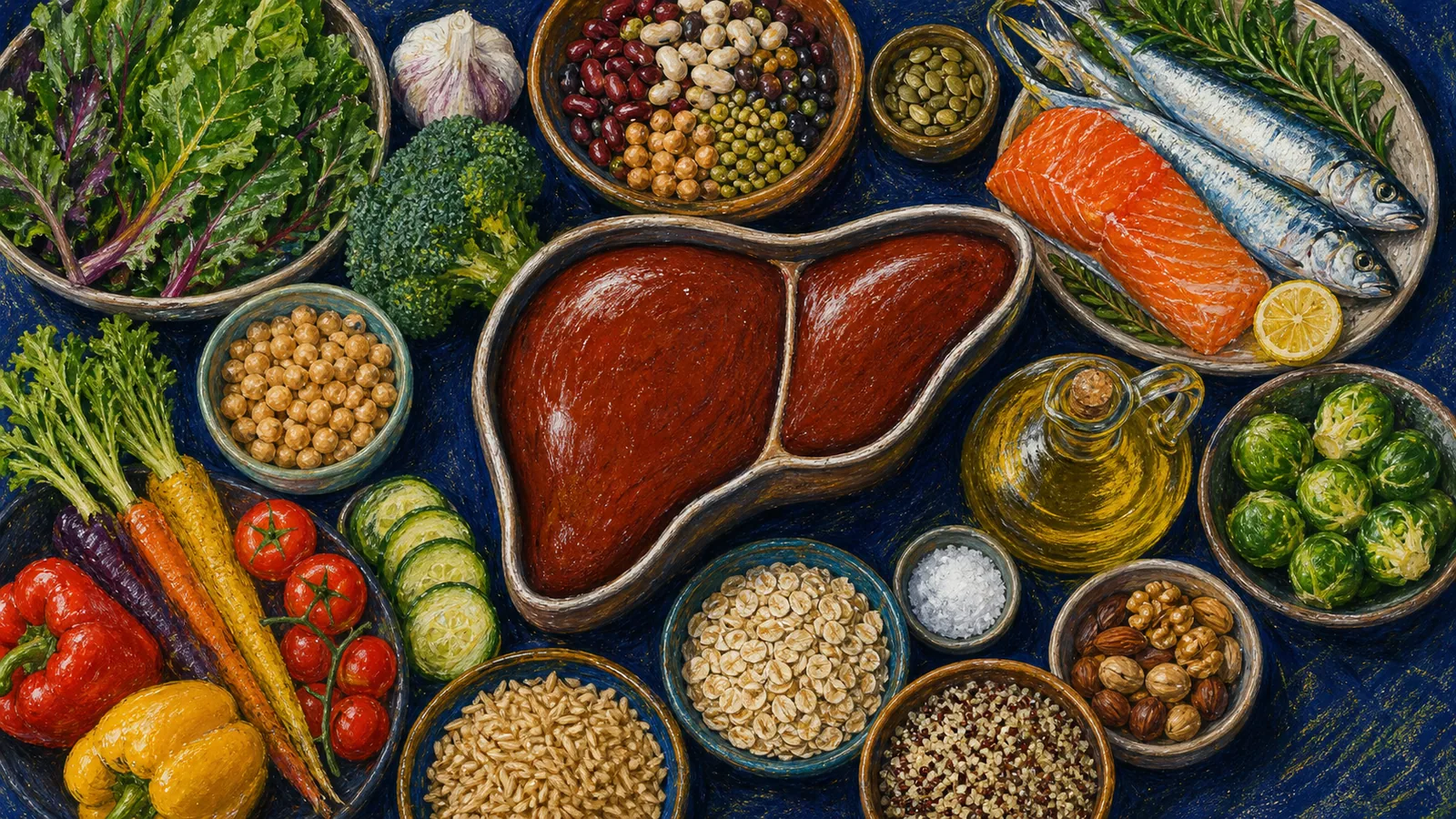
- Adopt a Mediterranean pattern. This is the diet with the most support in fatty liver. It is based on vegetables, legumes, fruit, nuts, olive oil, fish and whole grains, with little red meat and few processed products. In controlled studies it improves liver enzymes and reduces liver fat, even without major weight loss.
- Cut sugar and, above all, sugary drinks. Sugar-sweetened drinks and juices, and fructose in particular, are turned into fat inside the liver. Swapping them for water is one of the most useful and easiest steps to measure.
- Reduce refined flour. White bread, pastries, cookies and snacks behave like fast sugar. Prefer whole grains and legumes, which are also more filling.
- Move. Regular physical activity reduces liver fat even when weight does not change much. Brisk walking works, and combining it with some strength exercise adds benefit.
- Moderate or avoid alcohol. Alcohol adds to the metabolic damage. If there is significant fibrosis, the prudent course is to stop it.
You do not need a “miracle” food. Coffee without sugar, for example, is associated with less liver damage, but it is a modest contribution within an overall healthy pattern, not a cure on its own.
Nutrition when you have cirrhosis
Here the picture changes completely. In cirrhosis, especially when advanced, the main nutritional problem is not excess but shortage. The diseased liver handles energy poorly and the body begins to consume its own reserves, including muscle mass. Malnutrition and sarcopenia (loss of muscle mass and strength) are common and worsen the prognosis. Many people with cirrhosis look bloated from fluid in the abdomen but have thin arms and legs: they may be malnourished even though the scale does not show it.
The recommendations here go almost in the opposite direction to those for fatty liver:
- Eat enough, spread through the day. A generous energy intake is recommended, avoiding long fasts. Instead of two or three large meals, it is better to split intake into several smaller meals and snacks across the day.
- Do not restrict protein. This is the most important change from what was believed before. For years protein was limited out of fear of hepatic encephalopathy, but we now know this is a mistake: restriction worsens muscle loss and does not prevent encephalopathy. People with cirrhosis need more protein than a healthy person, not less.
- Add a bedtime snack. A late evening snack that includes carbohydrates and some protein shortens the overnight fast, which in cirrhosis is especially damaging to muscle. It is one of the best-supported measures and one of the easiest to apply.
- Spread protein across the day. Distributing protein intake between meals helps the body use it better to maintain muscle.
Protein from plant and dairy sources is usually well tolerated and may be preferable to large amounts of red meat, but the underlying idea is clear: the goal is to secure intake, not cut it. Any fine-tuning should be done with your physician or a dietitian, ideally one experienced in liver disease.
Salt and ascites
When cirrhosis causes fluid retention, in the abdomen (ascites) or in the legs (edema), managing salt becomes important. Sodium holds water, so reducing it helps control the swelling.
- Aim for a moderately low-sodium diet, not a bland, completely salt-free one. Overly strict restriction makes food unpleasant, leads to eating less and worsens malnutrition, which is the bigger risk.
- Much of the sodium comes not from the salt shaker but from processed foods: cured meats, sausages, cheese, packet soups, canned goods, snacks, and sauces such as soy sauce, ketchup and mayonnaise. Reading labels helps more than removing the salt shaker.
- To add flavor without sodium, use lemon juice, herbs, garlic, pepper or chili.
- Do not use “sodium-free” salt substitutes without checking, because many contain potassium and can be a problem with certain medications or with the kidneys.
Vitamins, supplements and “liver herbs”
More is not better. Megadose vitamin supplements, especially of vitamin A, can be toxic to the liver. If there is a real deficiency (for example of vitamin D or some B vitamins), your physician will correct it in a targeted way; taking supplements “just in case” adds nothing and can cause harm.
Take particular care with “natural” products and medicinal herbs, which are not harmless just because they are sold over the counter. Several are linked to liver injury, including infusions of plants from the Senecio, Crotalaria and Heliotropium genera, chaparral, comfrey, skullcap and pennyroyal, as well as concentrated green tea supplements in high doses. If you have a liver condition, ask before taking any supplement or herbal infusion.
The practical bottom line
If you have fatty liver, the focus is on losing weight, following a Mediterranean pattern, cutting sugar and sugary drinks, staying active and watching alcohol. If you have cirrhosis, the focus is the opposite: eating enough, not restricting protein, adding a bedtime snack, and managing salt only if there is fluid retention. And in both cases, forget the products that promise to “cleanse” the liver. What heals is not a bottle, it is consistency.
See also
References
- European Association for the Study of the Liver. EASL Clinical Practice Guidelines on nutrition in chronic liver disease. J Hepatol. 2019;70(1):172-193.
- Plauth M, et al. ESPEN guideline on clinical nutrition in liver disease. Clin Nutr. 2019;38(2):485-521.
- Bischoff SC, et al. ESPEN practical guideline: clinical nutrition in liver disease. Clin Nutr. 2020;39(12):3533-3562.
- EASL-EASD-EASO Clinical Practice Guidelines on the management of metabolic dysfunction-associated steatotic liver disease (MASLD). J Hepatol. 2024;81(3):492-542.
- Del Bo' C, et al. Does the Mediterranean diet have any effect on lipid profile, central obesity and liver enzymes in NAFLD subjects? A systematic review and meta-analysis of randomized controlled trials. Nutrients. 2023;15(10):2250.
Related articles
Compensated cirrhosis: follow-up and care
Compensated cirrhosis can remain stable for years. Learn which regular follow-up checks help prevent decompensation and detect liver cancer early.
How to choose a good hepatologist in Chile
Verifiable criteria for choosing a hepatologist in Chile: professional registration, training, relevant experience, clinical network, communication and follow-up.
Causes of liver cirrhosis
The causes of cirrhosis, from the most to the least common, and why identifying and treating the cause early can stop and even reverse liver damage.