On this page
There is no official ranking that can identify the best hepatologist in Chile for every person and every liver disease. There are, however, practical criteria for choosing a good specialist: verifiable credentials, liver-focused training, experience relevant to your condition, access to the right clinical team and communication that lets you understand and take part in decisions.
A short checklist
| What to review | How to check it |
|---|---|
| Professional registration | Look up the physician in Chile’s National Registry of Individual Health Providers. |
| Relevant training | Review training in internal medicine and gastroenterology, plus work focused on hepatology. |
| Experience with your problem | Confirm experience with the specific situation: hepatitis, cirrhosis, MASLD, transplantation, tumors or abnormal tests. |
| Clinical network | Complex disease may require radiology, pathology, surgery, oncology or transplantation. |
| A clear plan | You should understand the likely diagnosis, next steps and timing of follow-up. |
| Access and continuity | Compare locations, availability, official contact channels and continuity of care. |
1. Verify professional registration
In Chile, start with the National Registry of Individual Health Providers maintained by the Health Superintendence. It allows you to check professional registration and specialties reported to the system. Do not rely only on social media or commercial directory profiles, which may be incomplete or out of date.
2. Understand hepatology and gastroenterology
Gastroenterology covers the digestive system. Hepatology focuses on the liver and bile ducts. Many hepatologists first train in internal medicine and gastroenterology and then devote additional training and clinical work to liver disease.
A gastroenterologist may be right for a general digestive problem. For cirrhosis, viral hepatitis, advanced fibrosis, transplantation, liver tumors or a complex second opinion, look for specific hepatology experience.
3. Look for relevant experience, not a “best” label
The experience that matters depends on your needs. A person with metabolic dysfunction-associated steatotic liver disease (MASLD) does not need exactly the same clinical network as someone being evaluated for liver transplantation or liver cancer. Review the physician’s areas of practice, publications, teaching or institutional roles that are relevant to your case.
4. Assess the consultation itself
A good consultation is not measured by how many tests are ordered. The specialist should listen to your priorities, review medications and risk factors, explain what is known and uncertain, propose a plan proportional to risk, and define warning signs and follow-up.
5. Use online reviews cautiously
Reviews may describe punctuality, communication or booking, but they cannot reliably compare clinical quality. An individual experience does not replace credential verification or show that a physician is the right match for a specific disease.
When should you seek a second opinion?
It may help when the diagnosis is uncertain, treatment has major consequences, surgery or transplantation is being considered, a liver tumor is found, disease progresses unexpectedly or the current plan is unclear. Bring reports, results, images and a medication list. A well-prepared second opinion aims to confirm or improve the plan, not repeat tests without a reason.
One option in Santiago
Dr. Alejandro Soza is a hepatologist and gastroenterologist, Full Professor at the Pontificia Universidad Católica de Chile, with a clinical practice in the UC CHRISTUS Health Network. His profile lists his training, areas of practice, locations and the official booking link.
In summary: choose using verifiable information and your specific clinical need. “Best” is not a credential; a good match combines relevant training and experience, clinical support, clear communication and continuity of care.
References
Related articles
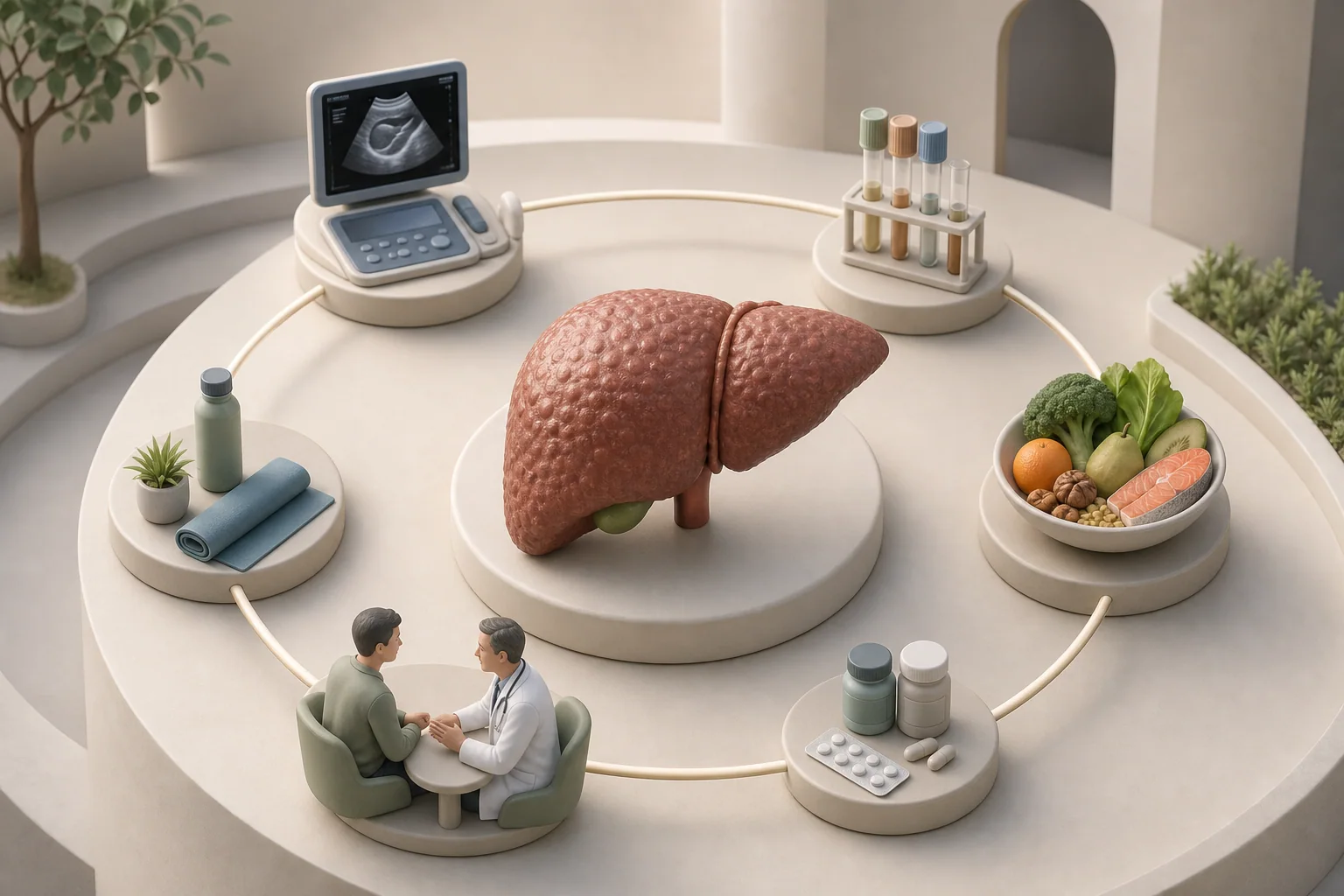
Compensated cirrhosis: follow-up and care
Compensated cirrhosis can remain stable for years. Learn which regular follow-up checks help prevent decompensation and detect liver cancer early.
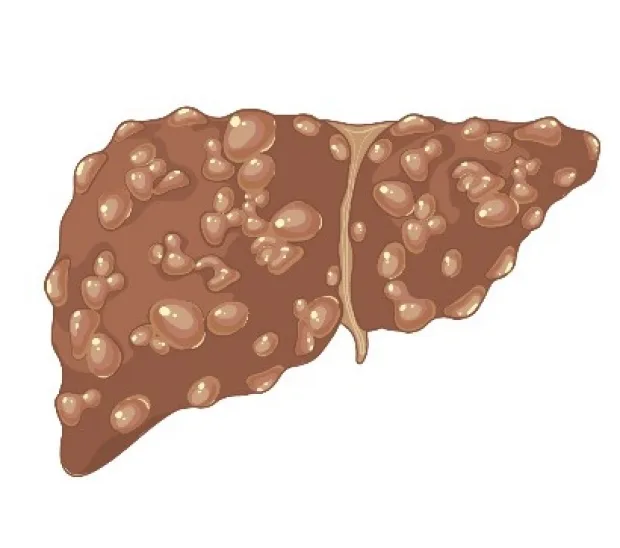
Causes of liver cirrhosis
The causes of cirrhosis, from the most to the least common, and why identifying and treating the cause early can stop and even reverse liver damage.
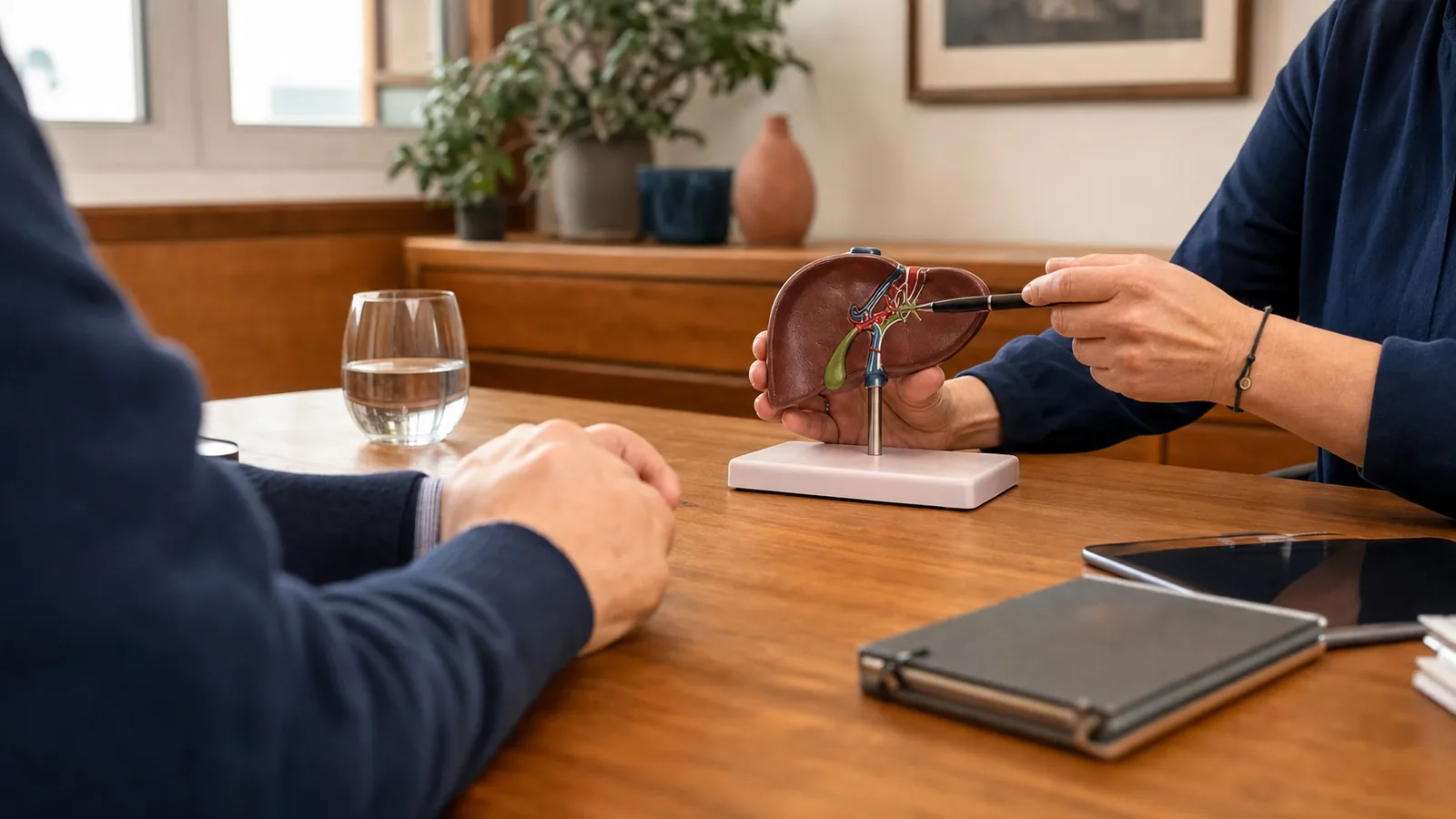
Hepatology: what it is and what a hepatologist does
Hepatology is the branch of medicine that studies the liver and bile ducts. What a hepatologist does and when you should see one.