On this page
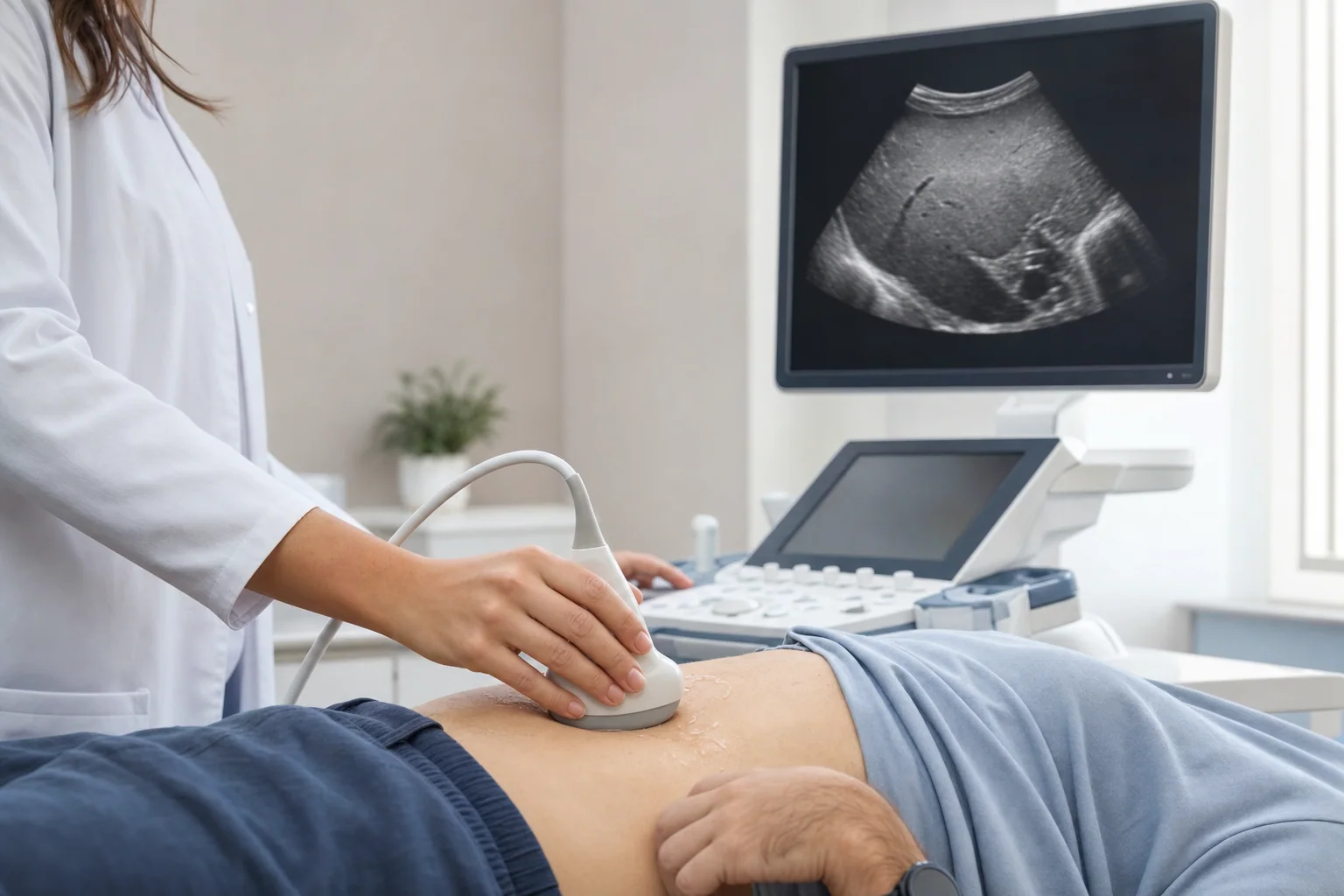
When an ultrasound reports fatty liver, it means that fat has accumulated inside the liver. This is a very common finding and, in most people, it does not indicate serious liver disease. It should not be ignored, however. Ultrasound can detect fat, but it cannot reliably show whether inflammation or fibrosis is present.
If you have been told that you have fatty liver, the next step is usually not another ultrasound. It is more useful to look for the cause, review your metabolic risk factors and estimate the risk of fibrosis with simple tests. Much of this evaluation can be done in primary care.
What does the ultrasound result mean?
Fat makes the liver look brighter than the kidney on ultrasound. The report may describe mild, moderate or severe steatosis, but this grading does not measure liver damage or predict the outcome by itself. A person with a large amount of fat may have little fibrosis, while someone with subtle ultrasound changes may have more advanced disease.
The most common form of fatty liver is now called metabolic dysfunction-associated steatotic liver disease (MASLD). It often occurs together with excess weight, diabetes or prediabetes, high blood pressure, and elevated cholesterol or triglycerides. It can also affect lean people.
Which tests are useful?
The initial evaluation usually includes:
- ALT and AST liver enzymes, GGT, alkaline phosphatase and bilirubin.
- A complete blood count, including platelets.
- Blood glucose or hemoglobin A1c, cholesterol and triglycerides.
- Tests for hepatitis B and hepatitis C, depending on your history and medical assessment.
- A review of alcohol intake, medications, herbal products and supplements.
Liver enzymes may be normal even when fatty liver or fibrosis is present. A normal result therefore does not end the evaluation.
Assessing fibrosis matters most
Fibrosis is scar tissue that develops when the liver is injured over many years. It is the most useful finding for separating people at low risk from those who need closer assessment.
The first step is often the FIB-4 score, calculated from age, ALT, AST and platelet count. A low result usually means that metabolic risk factors can be treated and the assessment repeated at an interval recommended by your clinician. An intermediate or high result may lead to liver elastography, such as FibroScan, which measures liver stiffness.
A liver biopsy is reserved for selected cases when noninvasive tests do not provide a clear answer or another liver disease is suspected.
How is fatty liver treated?
There is no single measure. Treatment aims to improve metabolic health and reduce liver injury:
- Lose weight gradually if you are overweight. Sustained loss of 7 to 10% of body weight may improve inflammation and fibrosis.
- Exercise regularly, combining aerobic and strength activity as your health allows.
- Reduce sugary drinks, highly processed foods and excess refined carbohydrates.
- Treat diabetes, high cholesterol, elevated triglycerides and high blood pressure.
- Avoid alcohol while the evaluation is underway, especially if liver enzymes are elevated or fibrosis is present.
“Liver cleanses” and supplements are not recommended without medical advice. Some have no proven benefit, and others can injure the liver.
When should I see a specialist?
A gastroenterologist or liver specialist should assess you if FIB-4 or elastography suggests fibrosis, liver enzymes remain elevated, platelet counts are low or the cause is uncertain. Jaundice, fluid in the abdomen, confusion, gastrointestinal bleeding or unexplained weight loss require prompt medical assessment.
For most people, finding fatty liver is an opportunity to act before permanent damage develops.
See also
- Fatty liver disease (MASLD)
- FIB-4 and FibroScan
- ALT and AST liver enzymes
- Nutrition and the liver
References
- Rinella ME, Neuschwander-Tetri BA, Siddiqui MS, et al. AASLD Practice Guidance on the clinical assessment and management of nonalcoholic fatty liver disease. Hepatology. 2023;77(5):1797-1835.
- European Association for the Study of the Liver, European Association for the Study of Diabetes, European Association for the Study of Obesity. EASL-EASD-EASO Clinical Practice Guidelines on the management of metabolic dysfunction-associated steatotic liver disease (MASLD). J Hepatol. 2024;81(3):492-542.
- Kanwal F, Shubrook JH, Adams LA, et al. Clinical Care Pathway for the Risk Stratification and Management of Patients With Nonalcoholic Fatty Liver Disease. Gastroenterology. 2021;161(5):1657-1669.
Related articles

Semaglutide and fatty liver: what we know
Semaglutide (Ozempic, Rybelsus) may improve MASH in selected patients, but it does not replace fibrosis assessment. Learn about its benefits, limitations and risks.

Fatty liver disease (MASLD)
Fatty liver, now called metabolic dysfunction-associated steatotic liver disease (MASLD), is the most common liver disease. What it is, how it is diagnosed and how it is treated.

12 questions about fatty liver (MASLD)
Is fatty liver serious? Can it be cured? What diet should you follow? Clear answers to the 12 most common questions about fatty liver (MASLD).