On this page
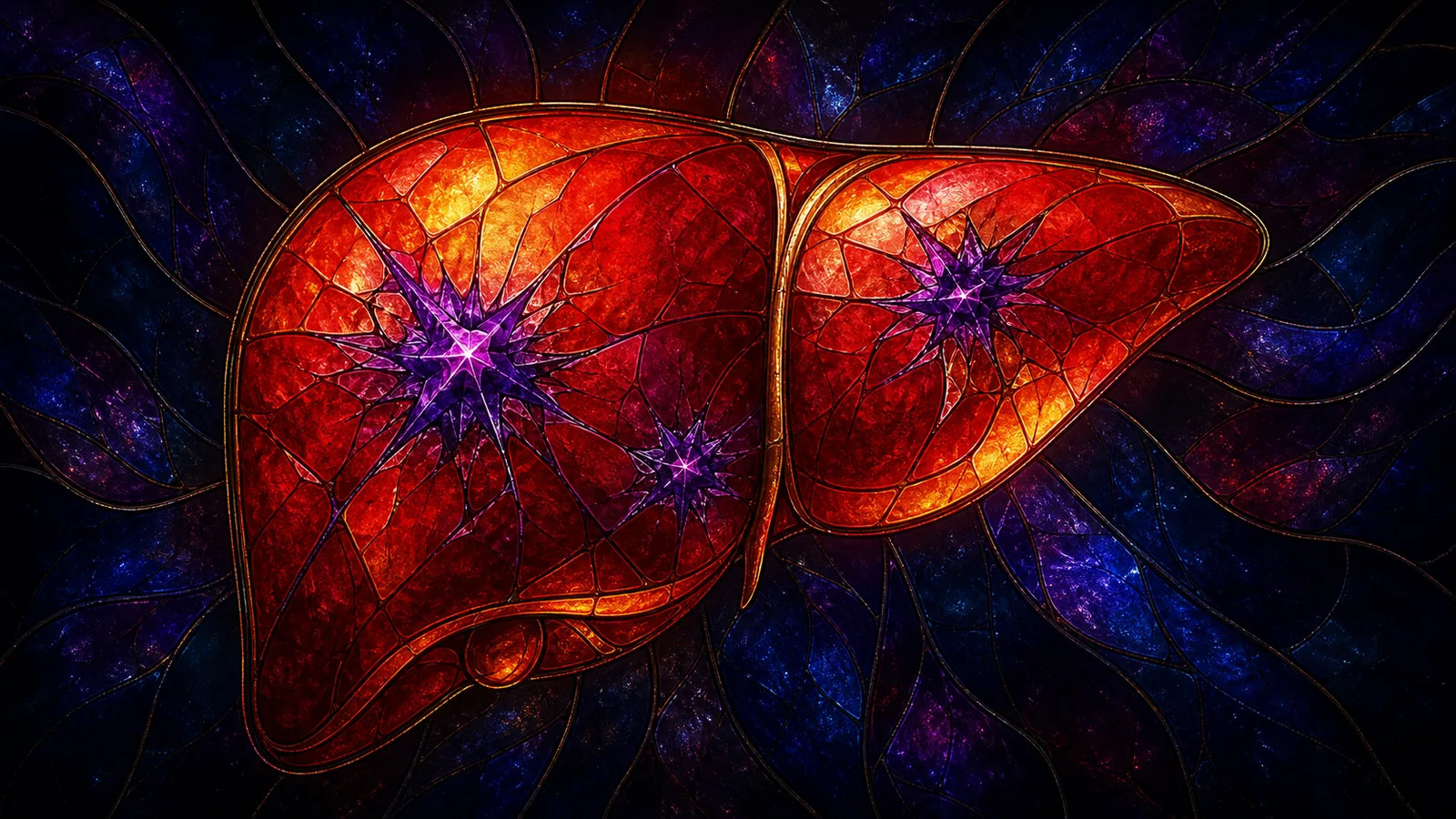
Herpes hepatitis is inflammation of the liver caused by the herpes simplex virus (HSV), the same virus that causes cold sores on the lips or genital herpes. It is a very rare cause of liver damage, but when it occurs it can produce a severe, rapidly progressing acute liver failure. The most important thing to know is that it is a potentially fatal emergency in which early diagnosis and immediate intravenous acyclovir can save a life.
It mainly affects two groups: pregnant women, especially in the third trimester, and immunocompromised people (those with weakened defenses). A key difficulty is that in most cases there are no blisters or skin lesions to suggest herpes, so the physician must suspect it whenever there is acute liver failure of unclear cause in these at-risk groups.
What is the herpes simplex virus?
The herpes simplex virus is very common. There are two types: HSV-1, classically linked to cold sores on the lips, and HSV-2, linked to genital herpes. Both can cause hepatitis. Most people are infected at some point in life, almost always without serious consequences.
After the first infection, the virus does not disappear: it stays “asleep” (latent) in the nerve ganglia and can reactivate years later. These reactivations are usually mild and local, but under certain conditions the virus spreads through the blood and involves internal organs, including the liver.
Who is at higher risk?
Severe herpes hepatitis is exceptional in healthy people. Risk rises when the immune defenses are lowered or during pregnancy:
- Pregnancy, especially the third trimester. Pregnancy produces a state of reduced immunity that favors spread of the virus.
- Immunosuppression from advanced HIV, chemotherapy, blood cancers or conditions that weaken the defenses.
- Organ or bone marrow transplant recipients, because of the drugs that prevent rejection.
- Use of corticosteroids (steroids) or other immunosuppressants.
- Newborns, who can become infected during delivery.
In some cases, however, herpes hepatitis appears in previously healthy people, which makes it even harder to suspect.
What symptoms does it cause?
The early symptoms are nonspecific and resemble those of many other illnesses, which is why the diagnosis is often delayed. The most common are:
- Fever, present in the great majority of cases.
- Abdominal pain, especially on the right side.
- General malaise, nausea and vomiting.
- Loss of appetite.
As it progresses, signs of acute liver failure appear: clotting abnormalities, confusion (encephalopathy) and involvement of other organs. A characteristic feature is that the typical herpes lesions in the mouth or genitals are absent in most patients, so their absence does not rule out the diagnosis.
How is it diagnosed?
The first step is clinical suspicion: thinking of the herpes simplex virus in a pregnant or immunocompromised person with fever and acute liver failure of unexplained cause. A laboratory pattern helps point toward the diagnosis:
- Very high liver enzymes (AST/ALT), often hundreds of times above normal.
- Relatively low bilirubin for how dramatic the picture is (this is called “anicteric” hepatitis, that is, without marked jaundice).
- A drop in white blood cells and clotting abnormalities.
Confirmation is made by detecting the virus’s genetic material in the blood with an HSV PCR, a fast and sensitive test. When there are lesions on the skin or mucous membranes, that fluid can also be tested. In some cases a liver biopsy is used to confirm the diagnosis. The essential point is that treatment should not wait for confirmation when suspicion is high.
How is it treated?
The treatment is intravenous acyclovir, an antiviral that acts directly against the herpes simplex virus. The key to the outcome is time: starting acyclovir early, even empirically (before confirmation), substantially lowers mortality.
For that reason, current practice recommends starting empiric acyclovir in any acute liver failure of unexplained cause, especially in pregnant and immunocompromised people, without waiting for the PCR result. In the most severe cases an emergency liver transplant may be needed. In the rare situations of acyclovir resistance, foscarnet is used.
Without treatment, herpes hepatitis carries a very high mortality. With early suspicion and timely acyclovir, the outlook improves markedly. That is the central message of this article: faced with unexplained acute liver failure in an at-risk person, there is no time to lose.
See also
References
- Then EO, et al. Herpes Simplex Virus Hepatitis: A Brief Review of an Oft-overlooked Pathology. Cureus. 2019;11(3):e4313.
- Riediger C, et al. Herpes simplex virus sepsis and acute liver failure. Clin Transplant. 2009;23 Suppl 21:37-41.
- Magawa S, et al. A literature review of herpes simplex virus hepatitis in pregnancy. J Matern Fetal Neonatal Med. 2020;33(10):1774-1779.
- Van Wagoner N, et al. Genital Herpes Infection: Progress and Problems. Infect Dis Clin North Am. 2023;37(2):351-367.
- Dionne-Odom J, et al. Treatment and prevention of viral hepatitis in pregnancy. Am J Obstet Gynecol. 2021;226(3):335-346.
Related articles
Hepatitis D testing: who should be tested
Hepatitis D affects only people with hepatitis B and can accelerate cirrhosis. Learn who should be tested and how active infection is confirmed.

After hepatitis C cure: follow-up and care
Curing hepatitis C removes the virus, but some patients still need follow-up. Learn when to repeat tests and continue long-term liver surveillance.

Hepatitis B and pregnancy
Hepatitis B can pass to a baby during birth, but transmission is usually preventable with maternal care, vaccination and immunoglobulin at birth.